STO · ∩
The cat is an accidental stoic, and it has something to teach the founder
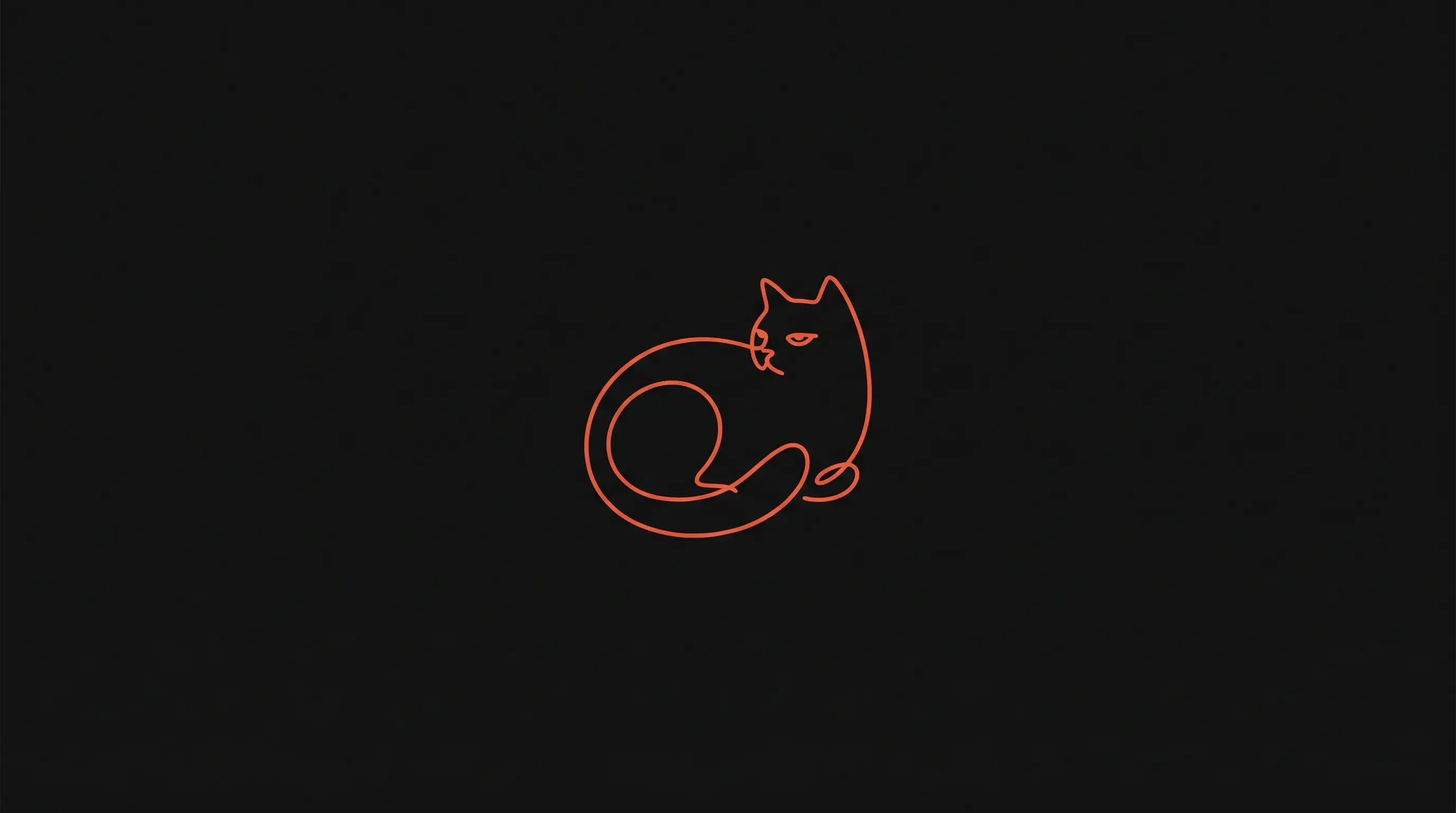
A cat has never read Epictetus and embodies him better than most people who have. It is self-possessed, indifferent to your approval, fully present when it acts and fully at rest when it does not. For a founder wired to perform, to seek approval, and to never stop moving, the cat is not a meme. It is a temperament worth borrowing — with one honest caveat about why you cannot become one.
Virtue it never studied
Watch a cat and you see a set of dispositions the Stoics and Taoists spent lifetimes trying to cultivate deliberately. It does not perform for approval — the cat that ignores you is not being coy; it genuinely does not need your opinion, which is exactly the freedom Epictetus was pointing at when he said the mark of progress is to expect nothing from external validation. It acts from its own nature rather than from expectation, which is close to the Taoist wu wei: effortless action, doing the thing that is in you to do without strain or performance. And it rests completely, hunts completely, and ignores everything in between — a presence most humans cannot manage for five minutes.
John Gray built a whole book on this in Feline Philosophy: cats are content in a way humans are not, precisely because they do not construct a self to defend, do not narrate their lives, and do not seek meaning outside living. The dog, by contrast, is the status-anxious one — eager to please, reading your mood, desperate for approval. Most founders, if they are honest, are dogs.
The temperament worth borrowing
The high-initiating, approval-seeking, always-shipping founder — the one who checks the metrics like a slot machine and performs for the feed — is running the opposite of the cat's operating system, and paying for it in equanimity. The borrowable moves are specific: stop performing for approval you do not need, rest without guilt when the work is done, act from your own judgment rather than the audience's expectation, and — the most feline discipline of all — do not chase. The cat that ignores you is the one you want; the deal, the hire, and the reader you pursue too hard are the ones you repel. Presence over hustle is not a slogan here. It is watching an animal that has never hustled a day in its life and getting exactly what it wants.
When I play with my cat, who knows whether she is not amusing herself with me more than I with her?Michel de Montaigne
A worked temperament: the deal you stop chasing
Borrow the cat for a concrete situation, because the composure only matters where it changes a move. A promising partnership is drifting. The dog in you wants to chase — the third follow-up, the slightly-too-eager email, the discount to keep them interested — and every one of those moves quietly lowers your status and confirms to the other side that they can wait, because your need is now visible. The cat does the opposite by doing nothing: it states its terms once, plainly, and then genuinely does not need the answer, and that absence of need is the most attractive signal in the exchange. The deal you stop chasing is frequently the deal that turns around, not as a manipulation tactic but because you have stopped supplying evidence that you can be waited out.
The same posture applies to the feed. Checking the metrics like a slot machine, refreshing to see if the post landed, performing for an audience whose approval you do not actually respect — this is the dog reading the room, desperate to please, and it costs you exactly the equanimity the cat has for free. The borrowable move is to act from your own judgment of whether the work is good, rest without guilt when it is done, and let the reaction be the reaction. You do the thing that is in you to do, and you decline to perform it for applause you were never going to value anyway.
None of this is coldness; it is the specific freedom that comes from not needing a particular external result. The cat is not indifferent to good outcomes — it very much wants the warm spot and the food — it is indifferent to your opinion about whether it should have them, and that is the distinction worth stealing. Want the deal, want the work to land, and refuse to chase either in a way that hands your leverage to whoever you are chasing.
Why you should not actually become a cat
This is the fun half, so here is the honest correction. Three of them.
One: it is a projection. The cat is not wise; it is an animal following instinct, and we are pattern-matching virtue onto indifference because it flatters us. "The stoic cat" is a story we tell, and dressing your own preferences up as feline wisdom is charming, not rigorous. The cat is not choosing non-attachment; it simply has no attachment to overcome.
Two: the indifference that suits a cat ruins a human. A cat can afford to need no one because it builds nothing with anyone. A founder is embedded in a team, a market, and a family, and the genuinely cat-like founder — uncooperative, indifferent to others, contemptuous of approval as feedback — fails, because companies are built by the cooperative, approval-reading, dog-like willingness to serve other people. The dog's anxiety is also the dog's superpower.
Three: cat-superiority is itself a status game. The whole "cat people are the real intellectuals" posture is, ironically, a bid for status — the exact game the cat is supposedly above. Borrow the composure; do not adopt the smugness that usually comes packaged with it.
So take the cat's composure into the parts of your life that are eating you alive with performance — and keep the dog's warmth for the parts that are actually built with other people. Be a cat about approval. Stay a dog about love.
Sources
- primaryJohn Gray, Feline Philosophy: Cats and the Meaning of Life (2020).
- primaryEpictetus, Enchiridion — freedom from the need for external validation.
- primaryMichel de Montaigne, "Apology for Raymond Sebond," Essays (1580).
- secondaryLaozi, Tao Te Ching — wu wei, effortless action.
Kot jest stoikiem mimo woli i ma czego nauczyć foundera
Kot nigdy nie czytał Epikteta, a jego naukę realizuje lepiej niż większość ludzi, którzy Epikteta przeczytali. Panuje nad sobą i nie zależy mu na twojej aprobacie. Kiedy działa, działa całym sobą; kiedy odpoczywa, odpoczywa całym sobą. Founder ani na chwilę nie schodzi ze sceny i nie umie przestać zabiegać o aprobatę publiczności. Od kota da się pożyczyć temperament, choć kotem nikt z nas nie zostanie.
Kot ma cnoty, których nikt go nie uczył
Popatrz na kota, a zobaczysz postawy, które stoicy i taoiści wypracowywali latami świadomej pracy. Kot nie zabiega o niczyją aprobatę. Ten, który cię ignoruje, nie robi tego na pokaz, tylko naprawdę nie potrzebuje twojej opinii — i właśnie tę wolność Epiktet uznawał za oznakę postępu: przestajesz oczekiwać czegokolwiek od cudzego uznania. Kot działa z własnej natury, a nie pod cudze oczekiwania — blisko taoistycznego wu wei, działania bez wysiłku, w którym robisz swoje, bez napięcia i bez pokazywania się. Odpoczynek i polowanie pochłaniają go bez reszty, a to, co pomiędzy, w ogóle go nie obchodzi — takiej obecności większość ludzi nie utrzyma przez pięć minut.
Różnicy między kotem a człowiekiem John Gray poświęcił całą książkę Kocia filozofia (Feline Philosophy). Człowiek buduje obraz samego siebie, a potem musi go bronić; opowiada sobie własne życie i szuka sensu poza samym życiem. Kot nie robi żadnej z tych rzeczy i dlatego jest zadowolony. Pies pilnuje swojej pozycji, więc sprawdza twój nastrój i czeka na aprobatę. Founderzy, jeśli są wobec siebie szczerzy, w większości są psami.
Co founder może od kota pożyczyć
Founder robi odwrotnie niż kot i płaci za to spokojem: sam zaczyna każdą rozmowę i wypuszcza kolejne wersje bez przerwy, a po każdej wraca do metryk jak do jednorękiego bandyty. Przestań zabiegać o aprobatę, której nie potrzebujesz, i odpocznij bez poczucia winy, kiedy robota jest skończona. Decyduj według własnej oceny, a nie według tego, czego spodziewa się publiczność. I nie goń. To najbardziej kocia dyscyplina ze wszystkich. Kot, który cię ignoruje, jest tym, na którym ci zależy — umowa, kandydat do zespołu i czytelnik, za którymi gonisz najmocniej, to ci, których odpychasz. Kot nigdy w życiu się nie zaharował, jest cały w tym, co akurat robi, i dostaje to, czego chce. Zapracowany człowiek zwykle nie ma ani jednego, ani drugiego.
Kiedy bawię się z moją kotką, kto wie, czy ona nie bawi się mną bardziej niż ja nią?Michel de Montaigne, Próby, ks. II, rozdz. XII
Umowa, za którą przestajesz gonić
Kocie opanowanie liczy się dopiero tam, gdzie zmienia konkretny ruch, więc sprawdźmy je w sytuacji hipotetycznej, ale znanej każdemu, kto negocjował: rozmowa o współpracy zaczyna gasnąć. Pies w tobie chce gonić: wysyłasz trzecie przypomnienie, piszesz mejl o ton za gorliwy albo dorzucasz rabat, żeby druga strona nie straciła zainteresowania. Każdy taki ruch po cichu obniża twoją pozycję i mówi drugiej stronie, że może spokojnie czekać, bo widać już, jak bardzo ci zależy. Kot robi odwrotnie, czyli nie robi nic: podaje swoje warunki raz, wprost, a potem naprawdę nie potrzebuje odpowiedzi — i ten brak potrzeby jest najmocniejszym sygnałem w całej rozmowie. Umowa, za którą przestajesz gonić, często wraca sama — nie dlatego, że to sprytna taktyka, tylko dlatego, że przestałeś dowodzić, że da się cię przeczekać.
To samo dzieje się przy telefonie. Odświeżasz ekran, żeby sprawdzić, czy post wszedł, i występujesz przed publicznością, której aprobaty i tak nie cenisz. Tak zachowuje się pies, który wyczuwa nastrój w pokoju i dopasowuje się do niego, byle się przypodobać, a kosztuje cię to spokój, który kot ma za darmo. Robisz robotę, która naprawdę jest twoja, i nie odgrywasz jej dla oklasków, na których ci nie zależy; reakcja niech będzie, jaka będzie.
Nic z tego nie jest chłodem — wolność bierze się tu stąd, że przestaje ci zależeć na jednym konkretnym rozstrzygnięciu z zewnątrz. Kotu zależy na dobrych wynikach: chce ciepłego miejsca i jedzenia, ale nie obchodzi go twoje zdanie o tym, czy mu się to należy, i to rozróżnienie przejmij od niego. Niech ci zależy na umowie i na tym, żeby robota trafiła do ludzi, ale nie goń za żadną z nich tak, by druga strona zobaczyła, że ustąpisz z ceny i z terminu.
Dlaczego naprawdę nie powinieneś stawać się kotem
Zacznijmy od tego, że obraz kota-stoika jest projekcją. Kot nie jest mądry; to zwierzę, które idzie za instynktem i nie ma przywiązania, które musiałoby przezwyciężać. Cnotę widzimy tam, gdzie jest zwykła obojętność, bo nam to schlebia. „Stoicki kot" to opowieść, którą układamy sobie sami; własne upodobania ubrane w kocią mądrość brzmią sympatycznie i niczego nie dowodzą.
Projekcja byłaby niegroźna, gdyby nie to, że obojętność, która kotu służy, człowieka rujnuje. Kot może nikogo nie potrzebować, bo z nikim niczego nie buduje. Founder buduje cały czas i zawsze z kimś: z zespołem, z rynkiem, a po godzinach z rodziną. Dlatego founder naprawdę koci przegrywa. Kiedy przestaje współpracować i uznaje cudzą aprobatę za słabość, traci jedyną informację o tym, czy jego produkt komukolwiek się przydaje, i dowiaduje się o tym za późno. Firmy budują ludzie, którzy wyczuwają, czego druga strona potrzebuje. Psi niepokój jest tu narzędziem pracy.
Jest jeszcze koszt mniej widoczny: kocia wyższość sama jest grą o status. Kto mówi, że „ludzie od kotów to prawdziwi intelektualiści", zabiega o pozycję w tej samej grze, od której kot rzekomo jest wolny. Opanowanie pożyczasz od kota; zadufanie, które zwykle przychodzi z nim w pakiecie, zostaw kotu.
Kocie opanowanie zabierz do negocjacji i do publikowania, czyli tam, gdzie wykańcza cię to, że ciągle przed kimś występujesz. Psie ciepło zostaw zespołowi i domowi, bo tam naprawdę coś z ludźmi budujesz. W poniedziałek rano sprowadza się to do jednego ruchu: nie wysyłasz trzeciego przypomnienia i patrzysz, co się stanie. Spokoju kota to ci nie da. Kotu nigdy na niczym nie zależało, tobie zależy i będzie zależeć; zmienia się tylko to, czy twoja potrzeba dyktuje ci ruchy.
Bibliografia
- primaryJohn Gray, Kocia filozofia (Feline Philosophy) (2020).
- primaryEpiktet, Encheiridion — wolność od potrzeby zewnętrznej walidacji.
- primaryMichel de Montaigne, „Apologia Rajmunda Sebond", Próby (1580).
- secondaryLaozi, Tao Te Ching — wu wei, działanie bez wysiłku.