AI · MBA
Growth will not split the gains from AI by itself
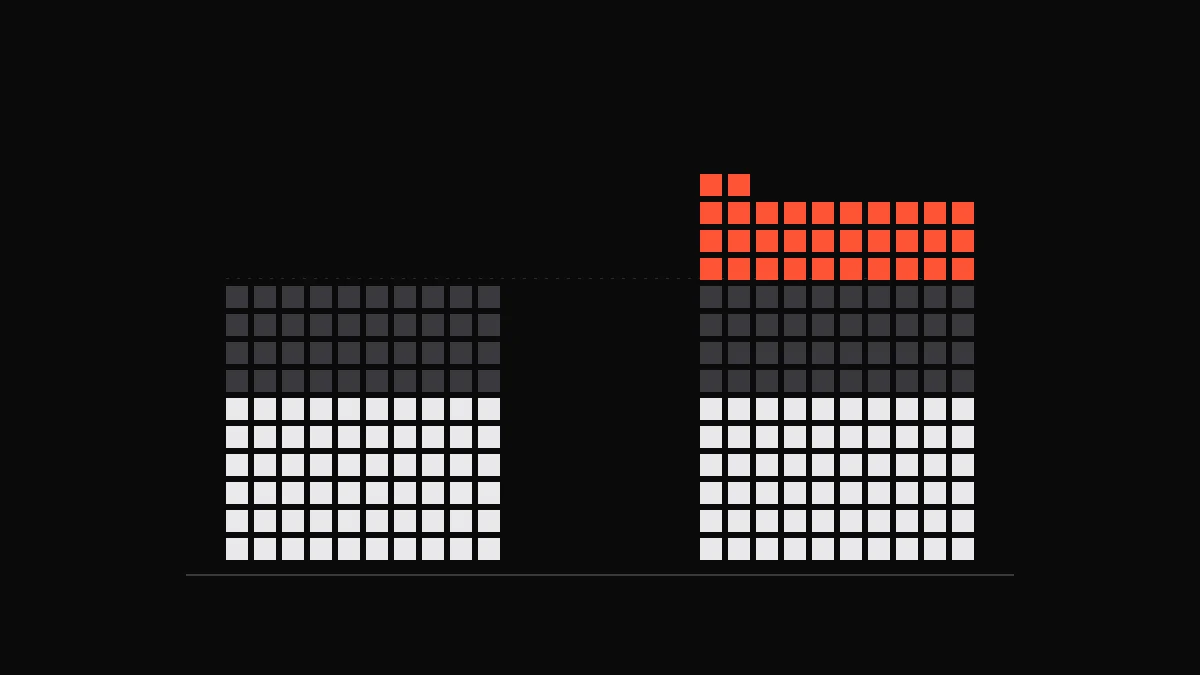
Anyone planning a team or a company on the belief that the gains from AI will spread through the economy on their own leaves the decision to the defaults. The report by economists at the Anthropic Institute shows that in the extreme one of its three modeled scenarios, at the baseline elasticity of capital supply, the default hands all of the increase in GDP to capital.
I am arguing with the thesis of automatic distribution: the growth AI produces will lift everyone, so there will be no losers. I do not attribute it to any company or person. The dispute is about the reasoning. My figures come from a report written inside a lab that builds models, and its authors state that no scenario is a forecast. I take that caveat literally.
What the report says and what it does not
The report is titled Economic Scenarios for Transformative AI and came out in September 2026 as Working Paper No. 2026-02 of The Anthropic Institute. It was written by Anton Korinek, Charles I. Jones, Szymon Sacher, Tess Cotter and Peter McCrory. It models the US economy to 2030, in which AI takes over a growing share of cognitive tasks. By the authors' definition, cognitive occupations are management, professional, sales and office work. The rest of the economy, construction workers and electricians for example, is not directly exposed. The authors state that the views in the report are their own and not necessarily the position of Anthropic or The Anthropic Institute.
The model turns a few parameters into paths for GDP, wages, the labor share of income, movement between occupations and unemployment. The parameters describe what share of tasks AI affects and how widely it is used. Next come how much AI raises productivity on a task and what part of its use replaces a person and what part helps one. The last parameter is the number of new tasks for cognitive workers per automated task. Two more settings concern the labor market: how hard it is for a laid-off person to change occupation and how fast the other occupations open new vacancies. The authors set wage rigidity identically in all scenarios and test it separately.
The authors describe three scenarios: modest, substantial and extreme. They say these are not forecasts and that they attach no probabilities to them. The model leaves out, among other things, catastrophic risks, political-economy considerations, business cycles, financial-market disruptions, robotics, and a fall in demand that could amplify the effects of layoffs.
The report comes with a survey of 10,980 US adults (Morning Consult, 11–23 August 2026). The authors ran the answers through the model, and 3,259 people who answered all five questions in the 2030 version of the survey entered the simulation. The median of the outcomes comes out close to the substantial scenario. In the simulations from the answers, GDP in 2030 is 8.6% higher than without AI and employment in cognitive occupations is 4.2% lower than in mid-2026. These are medians across respondents. The substantial scenario itself gives 8.3% and 3.9%. Views are widely dispersed, and the four parameters that were not asked about were set as in the substantial scenario.
The authors do not rule out any of the three today.
The strongest version of the opposing thesis
Let us start with the optimist's case. In the textbook version of the model, the supply of capital in the long run is perfectly elastic because machines can always be built, so the whole productivity gain goes to labor and raises wages, while capital earns what it always did. After all the adjustments, the report's model leaves a single wage, and it usually rises thanks to AI. The simulation ends in 2030, though, so it does not cover that long run.
The optimist adds an aggregate calculation. Even in the extreme scenario the economy's gain is almost three times the loss of cognitive workers, so the resources to compensate them exist. The optimist adds an argument from scale too: according to the authors, in the modest and substantial scenarios the reallocation of labor, though costly, is of a size the US labor market has absorbed before. In the macroeconomic data the effects of AI on the labor market have so far been relatively muted, though the data on starting wages in exposed occupations are mixed. The authors regard the muted effects as consistent with two readings: a modest world or the beginning of an extreme one.
So the optimist is right on two counts. In the modest and substantial scenarios the reallocation of labor fits within what the market has already absorbed, and after all the adjustments the model leaves a single wage, which usually rises. Neither settles who gets the increase up to 2030.
A calculation that fits on a calculator
Labor income is the labor share times GDP. Take the extreme scenario in January 2030. The labor share falls from 60% to 45.2%, while GDP is 32.4% above the path without AI, meaning an imagined economy that would have grown without this technology. Multiply: 0.452 times 1.324 gives about 0.60. Labor income barely changes. On the authors' baseline assumptions, including an elasticity of capital supply of 3, all of the increase in GDP turns into capital income, which is 81% higher than without AI.
The effects on workers are uneven. In this scenario the wage in cognitive occupations is 11.5% below the path without AI, while in the other occupations it is 33.6% above. The wage bill of cognitive occupations, with the unemployed counted as zero, is 31% below that path. Employment in these occupations is 21.5% lower than in mid-2026. The unemployment rate among people who started out in them reaches 17.9%, and in the whole economy 11.9%. The authors point out that annual unemployment rates in the US peaked at just under 10% after the global financial crisis and at about 8% in the pandemic recession.
The figure of 11.5% is easy to quote wrongly. It measures the distance from the path without AI, on which wages would have grown by about 2% a year, so according to the authors the wage in cognitive occupations ends up in 2030 slightly lower than in mid-2026.
In the model a fall in wages and unemployment are two channels through which the cost reaches cognitive workers. When wages adjust at once, the cognitive wage in the extreme scenario is more than 42% below the level without AI, and unemployment in that group is 2.6%. When they adjust very slowly, because half of the gap closes after seven years, the wage is 2.8% above the level without AI and unemployment in that group reaches 24%. The baseline result, 11.5% and 17.9%, splits the cost between the two channels.
An objection that shrinks the thesis
The strongest objection goes like this: the result of the extreme scenario follows from assumptions, and the authors chose the assumptions. The extreme scenario assumes that AI covers 30% of tasks in the economy, which is roughly half of the tasks cognitive occupations performed in 2025. On those tasks it more than doubles productivity, and of its use 90% is automation and 10% augmentation. No new tasks for cognitive workers appear at all. In the modest scenario one new task appears for every two automated tasks, in the substantial one for every four. The split between labor and capital also depends on the elasticity of capital supply. The authors set it at 3, call it an unmeasured number and do not vary it between scenarios, but they test it separately in a robustness exercise. They chose a relatively high value, which is more favorable to labor. With a more elastic supply of capital, labor keeps more of the gain, and with a less elastic one, the average wage can fall below the path without AI.
The objection holds and shrinks my thesis. I must not quote any figure from the extreme scenario as an expectation. The authors also note that catastrophic risks, political-economy considerations, business cycles and financial-market disruptions could turn out to matter in each of the three scenarios. The model also leaves out productivity growth of tasks that capital already performed before 2024. According to the authors this is a potentially important channel both for growth and for sustaining the labor share.
What remains is the direction, though only in the model. Under the assumed parameters the mechanics are the same in every scenario: output rises, employment in cognitive occupations falls and in the others it rises. They differ in size and pace. The labor share falls in each, from 60% to 59.4%, 56.1% and 45.2%. In the substantial scenario, closest to the survey median, the fall is four points in four years. The authors observe that this is only slightly less than the entire fall in the US labor share over the four decades after 1980 (Karabarbounis and Neiman 2014, cited via the report). The wage in cognitive occupations is 0.3% below the level without AI there, and in the other occupations 5.9% above. Unemployment in cognitive occupations rises from 2.9% to 4.5%.
What also remains is a hybrid from a footnote of the report, which in my reading shows that the pace of growth does not settle the fate of labor. Take the reach of AI and the productivity gain from the substantial scenario. Take automation and the absence of new tasks from the extreme one, together with a long time to find new work, and let the supply of capital be of low elasticity (1 instead of the baseline 3). GDP is then 7.2% above the level without AI, while total labor income is lower by 4.3% of GDP without AI. Holding the income of cognitive workers would require handing over 84% of the increase in GDP. The authors note that such values lie within the ranges they consider.
A transfer that does not happen by itself
The authors calculate that in the extreme scenario a transfer on the order of 9% of GDP would be enough. That is roughly the scale of Social Security and Medicare combined. The first program is mostly retirement and disability pensions, the second is health insurance for seniors. Such a transfer would hold the income of cognitive workers at the level of the path without AI and leave the rest of the economy more than 20% higher. They write that this is a scale without precedent as a response to technological change. Earlier cases of job displacement, such as the regional effects of Chinese import competition (Autor, Dorn and Hanson 2013, cited via the report), show that compensation mostly does not happen by itself.
In its closing section the report states, for the extreme scenario, a conclusion that contradicts automatic distribution. The resources for compensation exist. Whether and how they reach the people who bear the cost, growth does not deliver by itself. Retraining, income support, universal basic capital or basic income then become one of the central questions of economic policy.
A dispute about institutions at the level of the state needs another essay. At the level of one company the answer can be written down today.
Five numbers and one rule in your company
The report notes that each of its parameters can potentially be measured and that data from the next few years will show which scenario we are in. I add: in your own company you have that data without waiting for national statistics.
Once a quarter, write down five numbers for one role. The authors do not propose this. It is my adaptation of their parameters.
- What share of the role's tasks you hand to the model.
- By how much the model shortens the typical task.
- What part of that use replaces a person and what part helps one.
- How many new tasks appeared per automated task.
- How many months it takes a person from this role to find a new position inside the company or outside it.
In the survey the report tells respondents that about three months of job search is the norm.
The example is made up. I invented the numbers for the sake of the calculation. A customer-service team has six full-time positions and handles a constant number of requests. The model shortens a typical request by a third, which is as much as the survey median in the report expects for a task suited to AI. That frees two positions. You can eliminate them, move them to new tasks or give the team part of the savings. Elimination leaves the whole saving with the owner. Moving works only if new tasks exist, and that is the fourth of the five numbers. Giving part away costs margin.
The sharing rule is one sentence you write down before the first task of the role is automated: a fixed share of the savings goes to pay and retraining of the team, and the rest to margin. You choose the proportions. This rule is my own idea. The report does not contain it or justify it. Carrying the calculation over from the economy to a company is my own analogy, because the model describes factor markets and says nothing about how a company splits its savings. As a founder I sit on the capital side of this calculation, so if the model is right about the direction, the default works in my favor. That is a good reason to write it down.
I will change my mind about your role when new tasks appear at the pace of the modest scenario (one per two automated) or faster, and re-employment takes about three months. The role then comes close to the modest scenario on those two measures, and the sharing rule becomes a formality.
The authors allow that in a year or two it will be clearer which way the world is going. Until then every automated task in your company will pass through some rule for sharing the savings. Did you write that rule down, or did you inherit it from the defaults?
References
- primaryKorinek, A., Jones, C. I., Sacher, S., Cotter, T., McCrory, P. (2026). Economic Scenarios for Transformative AI. The Anthropic Institute Working Paper No. 2026-02, September 2026. https://www-cdn.anthropic.com/files/4zrzovbb/website/cf58f84d46a4a76bf5a5b039ac695fba6b80041c.pdf. Source of the figures and caveats taken from the report. The customer-service example is invented.
- primaryThe Anthropic Institute (2026). Scenarios for our Economic Future, the interactive scenario explorer that accompanies the report. https://www.anthropic.com/institute/econ-scenarios
- secondaryAutor, D., Dorn, D., Hanson, G. H. (2013). The China syndrome: Local labor market effects of import competition in the United States. American Economic Review, 103(6), 2121–2168. Cited via Korinek et al. (2026), who invoke this work when judging whether compensation happens by itself.
- secondaryKarabarbounis, L., Neiman, B. (2014). The global decline of the labor share. Quarterly Journal of Economics, 129(1), 61–103. Cited via Korinek et al. (2026), who invoke this work to compare the fall in the labor share after 1980.
Kto planuje zespół albo firmę w przekonaniu, że zysk z AI rozejdzie się po gospodarce sam, zostawia decyzję ustawieniom domyślnym. Raport ekonomistów z Anthropic Institute pokazuje, że w skrajnym z trzech modelowanych scenariuszy, przy bazowej elastyczności podaży kapitału, ustawienie domyślne oddaje kapitałowi cały przyrost PKB.
Spieram się z tezą o samoczynnym podziale: wzrost wytworzony przez AI podniesie wszystkich, więc przegranych nie będzie. Nie przypisuję jej żadnej firmie ani osobie. Spór dotyczy rozumowania. Liczby biorę z raportu, który powstał w laboratorium budującym modele, a jego autorzy zastrzegają, że żaden scenariusz nie jest prognozą. Przyjmuję to zastrzeżenie dosłownie.
Co raport mówi i czego nie mówi
Raport nosi tytuł Economic Scenarios for Transformative AI i ukazał się we wrześniu 2026 roku jako dokument roboczy nr 2026-02 The Anthropic Institute. Napisali go Anton Korinek, Charles I. Jones, Szymon Sacher, Tess Cotter i Peter McCrory. Modeluje gospodarkę USA do 2030 roku, w której AI przejmuje rosnącą część zadań poznawczych. Zawody poznawcze to w definicji autorów kadra kierownicza, specjaliści, sprzedaż i praca biurowa. Reszta gospodarki, na przykład budowlańcy i elektrycy, nie jest bezpośrednio narażona. Autorzy zastrzegają, że poglądy w raporcie są ich własne, niekoniecznie stanowisko Anthropic ani The Anthropic Institute.
Model zamienia kilka parametrów w ścieżki PKB, płac, udziału pracy w dochodzie, przepływów między zawodami i bezrobocia. Parametry opisują, jaka część zadań podlega wpływowi AI i jak szeroko się ją stosuje. Dalej: o ile AI zwiększa wydajność na zadaniu i jaka część użycia zastępuje człowieka, a jaka mu pomaga. Ostatni parametr to liczba nowych zadań dla pracowników poznawczych na jedno zautomatyzowane. Dwa dalsze ustawienia dotyczą rynku pracy: jak trudno zwolnionej osobie zmienić zawód i jak szybko pozostałe zawody otwierają nowe wakaty. Sztywność płac autorzy ustawili we wszystkich scenariuszach tak samo i sprawdzają osobno.
Autorzy opisują trzy scenariusze: umiarkowany, znaczny (w oryginale substantial) i skrajny. Zastrzegają, że to nie prognozy i że nie przypisują im prawdopodobieństw. Model pomija między innymi ryzyka katastroficzne, czynniki polityczno-ekonomiczne, cykle koniunkturalne, zaburzenia rynków finansowych, robotykę oraz spadek popytu, który mógłby wzmacniać skutki zwolnień.
Do raportu dołączono sondaż 10 980 dorosłych Amerykanów (Morning Consult, 11–23 sierpnia 2026). Autorzy przepuścili odpowiedzi przez model, a do symulacji weszły 3259 osób, które odpowiedziały na wszystkie pięć pytań w wersji ankiety na rok 2030. Mediana wyników wypada blisko scenariusza znacznego. W symulacjach z odpowiedzi PKB w 2030 roku jest o 8,6% wyższy niż bez AI, a zatrudnienie w zawodach poznawczych o 4,2% niższe niż w połowie 2026. Są to mediany po respondentach. Sam scenariusz znaczny daje 8,3% i 3,9%. Poglądy są mocno rozproszone, a cztery parametry, o które nie pytano, ustawiono jak w scenariuszu znacznym.
Autorzy nie wykluczają dziś żadnego z trzech.
Najmocniejsza wersja tezy przeciwnej
Oddajmy najpierw głos optymiście. W podręcznikowej wersji modelu podaż kapitału w długim okresie jest doskonale elastyczna, bo maszyny zawsze można dobudować, więc cały przyrost wydajności trafia do pracy i podnosi płace, a kapitał zarabia tyle co zawsze. Po wszystkich dostosowaniach w modelu raportu zostaje jedna płaca i zwykle rośnie dzięki AI. Symulacja kończy się jednak na 2030 roku, więc tego długiego okresu nie obejmuje.
Optymista dorzuca rachunek zbiorczy. Nawet w skrajnym scenariuszu zysk gospodarki jest prawie trzy razy większy niż strata pracowników poznawczych, więc zasoby na ich wyrównanie istnieją. Dorzuca też argument skali: według autorów w scenariuszach umiarkowanym i znacznym realokacja pracy, choć kosztowna, ma rozmiar, który amerykański rynek pracy już kiedyś wchłonął. W danych makroekonomicznych skutki AI dla rynku pracy były dotąd stosunkowo słabe, choć dane o płacach początkowych w narażonych zawodach są niejednoznaczne. Autorzy uznają ten brak wyraźnych skutków za zgodny z dwiema lekturami: światem umiarkowanym albo początkiem skrajnego.
Optymista ma więc rację w dwóch sprawach. W scenariuszach umiarkowanym i znacznym realokacja pracy mieści się w tym, co rynek już wchłonął, a po wszystkich dostosowaniach model daje jedną płacę, która zwykle rośnie. Żadna z nich nie rozstrzyga, kto dostaje przyrost do 2030 roku.
Rachunek, który zmieści się na kalkulatorze
Dochód z pracy to udział pracy w dochodzie razy PKB. Weźmy skrajny scenariusz na styczeń 2030. Udział pracy spada z 60% do 45,2%, a PKB jest o 32,4% wyższy niż na ścieżce bez AI, czyli w wyobrażonej gospodarce, która rosłaby bez tej technologii. Pomnóżmy: 0,452 razy 1,324 daje około 0,60. Dochód z pracy prawie się nie zmienia. Przy bazowych założeniach autorów, w tym elastyczności podaży kapitału równej 3, cały przyrost PKB zamienia się w dochód z kapitału, który jest o 81% wyższy niż bez AI.
Skutki dla pracowników są nierówne. W tym scenariuszu płaca w zawodach poznawczych jest o 11,5% niższa niż na ścieżce bez AI, a w pozostałych zawodach o 33,6% wyższa. Fundusz płac zawodów poznawczych, z bezrobotnymi liczonymi jako zero, jest o 31% niższy niż na tej ścieżce. Zatrudnienie w tych zawodach jest o 21,5% niższe niż w połowie 2026 roku. Stopa bezrobocia wśród osób, które w nich zaczynały, sięga 17,9%, a w całej gospodarce 11,9%. Autorzy przypominają, że szczytowe roczne stopy bezrobocia w USA wyniosły nieco poniżej 10% po światowym kryzysie finansowym i około 8% w recesji pandemicznej.
Liczbę 11,5% łatwo zacytować źle. Mierzy ona odległość od ścieżki bez AI, na której płace rosłyby o około 2% rocznie, więc według autorów płaca w zawodach poznawczych wypada w 2030 roku nieco niżej niż w połowie 2026.
W modelu spadek płac i bezrobocie są dwoma kanałami, którymi koszt dociera do pracowników poznawczych. Gdy płace dostosowują się natychmiast, płaca poznawcza jest w skrajnym scenariuszu o ponad 42% niższa niż bez AI, a bezrobocie w tej grupie wynosi 2,6%. Gdy dostosowują się bardzo wolno, bo połowa luki znika po siedmiu latach, płaca jest o 2,8% wyższa niż bez AI, a bezrobocie w tej grupie sięga 24%. Wynik bazowy, 11,5% i 17,9%, dzieli koszt między oba kanały.
Zarzut, który zmniejsza tezę
Najmocniejszy zarzut brzmi tak: wynik skrajnego scenariusza wynika z założeń, a założenia wybrali autorzy. Skrajny scenariusz zakłada, że AI obejmuje 30% zadań w gospodarce, czyli mniej więcej połowę zadań wykonywanych w 2025 roku w zawodach poznawczych. Na tych zadaniach ponad dwukrotnie podnosi wydajność, a z jego użycia 90% to automatyzacja, 10% wspomaganie. Nowe zadania dla pracowników poznawczych nie powstają wcale. W scenariuszu umiarkowanym na dwa zautomatyzowane zadania przypada jedno nowe, w znacznym jedno na cztery. Podział między pracę a kapitał zależy też od elastyczności podaży kapitału. Autorzy ustawili ją na 3, nazywają ją liczbą niezmierzoną i nie zmieniają jej między scenariuszami, ale sprawdzają ją osobno w teście odporności. Wybrali wartość raczej wysoką, korzystniejszą dla pracy. Przy bardziej elastycznej podaży praca zatrzymuje więcej przyrostu, a przy mniej elastycznej średnia płaca może spaść poniżej ścieżki bez AI.
Zarzut trafia i zmniejsza moją tezę. Nie wolno mi cytować jako oczekiwań żadnej liczby ze skrajnego scenariusza. Autorzy zaznaczają zresztą, że ryzyka katastroficzne, czynniki polityczno-ekonomiczne, cykle koniunkturalne i zaburzenia rynków finansowych mogłyby okazać się ważne w każdym z trzech scenariuszy. Model pomija też wzrost wydajności zadań, które kapitał wykonywał już przed 2024 rokiem. Według autorów to potencjalnie ważny kanał zarówno dla wzrostu, jak i dla utrzymania udziału pracy.
Zostaje kierunek, choć tylko w modelu. Przy przyjętych parametrach mechanika jest we wszystkich scenariuszach ta sama: produkcja rośnie, zatrudnienie w zawodach poznawczych maleje, a w pozostałych rośnie. Różni je rozmiar i tempo. Udział pracy w dochodzie spada w każdym, z 60% do 59,4%, 56,1% i 45,2%. W scenariuszu znacznym, najbliższym medianie ankietowanych, spadek wynosi cztery punkty w cztery lata. Autorzy zauważają, że to niewiele mniej niż cały spadek udziału pracy w USA w czterech dekadach po 1980 roku (Karabarbounis i Neiman 2014, za raportem). Płaca w zawodach poznawczych jest tam o 0,3% niższa niż bez AI, a w pozostałych zawodach o 5,9% wyższa. Bezrobocie w zawodach poznawczych rośnie z 2,9% do 4,5%.
Zostaje też hybryda z przypisu raportu, która w mojej lekturze pokazuje, że tempo wzrostu nie przesądza o losie pracy. Weźmy ze scenariusza znacznego zasięg AI i wzrost wydajności. Automatyzację i brak nowych zadań weźmy ze skrajnego, razem z długim czasem szukania nowego zajęcia, a podaż kapitału niech będzie mało elastyczna (1 zamiast bazowych 3). PKB jest wtedy o 7,2% wyższy niż bez AI, a łączny dochód z pracy niższy o 4,3% PKB bez AI. Utrzymanie dochodu pracowników poznawczych wymagałoby oddania 84% przyrostu PKB. Autorzy zaznaczają, że takie wartości mieszczą się w zakresach, które rozważają.
Transfer, który nie dzieje się sam
Autorzy liczą, że w skrajnym scenariuszu wystarczyłby transfer rzędu 9% PKB. To mniej więcej skala Social Security i Medicare razem wziętych. Pierwszy program to głównie emerytury i renty, drugi to ubezpieczenie zdrowotne seniorów. Taki transfer utrzymałby dochód pracowników poznawczych na poziomie ścieżki bez AI i zostawiłby resztę gospodarki ponad 20% wyżej. Piszą, że to skala bez precedensu w odpowiedzi na zmianę technologiczną. Wcześniejsze przypadki utraty pracy, takie jak regionalne skutki chińskiej konkurencji importowej (Autor, Dorn i Hanson 2013, za raportem), uczą, że wyrównanie w większości nie następuje samo.
W podsumowaniu raport dochodzi, dla scenariusza skrajnego, do wniosku, który zaprzecza samoczynnemu podziałowi. Zasoby na wyrównanie istnieją. Czy i jak dotrą do ludzi, którzy ponoszą koszt, tego wzrost sam nie dostarcza. Przekwalifikowanie, wsparcie dochodu, powszechny kapitał podstawowy czy dochód podstawowy stają się wtedy jednym z centralnych pytań polityki gospodarczej.
Spór o instytucje na poziomie państwa wymaga innego eseju. Na poziomie jednej firmy odpowiedź da się zapisać dziś.
Pięć liczb i jedna reguła w twojej firmie
Raport zauważa, że każdy z jego parametrów można potencjalnie zmierzyć, a dane z najbliższych lat pokażą, w którym scenariuszu jesteśmy. Ja dodaję: w swojej firmie masz te dane bez czekania na statystykę państwową.
Raz na kwartał zapisz dla jednej roli pięć liczb. Autorzy tego nie proponują. To moja adaptacja ich parametrów.
- Jaką część zadań roli oddajesz modelowi.
- O ile model skraca typowe zadanie.
- Jaka część tego użycia zastępuje człowieka, a jaka mu pomaga.
- Ile nowych zadań przypadło na jedno zautomatyzowane.
- Ile miesięcy zajmuje osobie z tej roli znalezienie nowego miejsca w firmie lub poza nią.
W ankiecie raport podaje respondentom jako normę około trzech miesięcy poszukiwania pracy.
Przykład jest skonstruowany. Liczby wymyśliłem na potrzeby rachunku. Zespół obsługi klienta liczy sześć etatów i obsługuje stałą liczbę zgłoszeń. Model skraca typowe zgłoszenie o jedną trzecią, czyli o tyle, ile przy zadaniu nadającym się dla AI oczekuje mediana ankietowanych w raporcie. To uwalnia dwa etaty. Możesz je zlikwidować, przesunąć do nowych zadań albo oddać zespołowi część oszczędności. Likwidacja zostawia całą oszczędność właścicielowi. Przesunięcie działa tylko wtedy, gdy nowe zadania istnieją, a to czwarta z pięciu liczb. Oddanie części kosztuje marżę.
Reguła podziału to jedno zdanie, które zapisujesz, zanim pierwsze zadanie roli zostanie zautomatyzowane: z oszczędności określona część idzie na płace i przekwalifikowanie zespołu, a reszta do marży. Proporcje wybierasz sam. Ta reguła jest moim pomysłem. Raport jej nie zawiera ani nie uzasadnia. Przeniesienie rachunku z gospodarki na firmę to moja analogia, bo model opisuje rynki czynników produkcji i o podziale oszczędności w firmie milczy. Jako founder siedzę w tym rachunku po stronie kapitału, więc jeśli model ma rację co do kierunku, ustawienie domyślne działa na moją korzyść. To dobry powód, żeby je zapisać.
Zmienię zdanie o twojej roli, gdy nowe zadania przybywają w tempie scenariusza umiarkowanego (jedno na dwa zautomatyzowane) albo szybciej, a ponowne zatrudnienie trwa około trzech miesięcy. Rola zbliża się wtedy do scenariusza umiarkowanego w tych dwóch wymiarach, a reguła podziału staje się formalnością.
Autorzy dopuszczają, że za rok lub dwa będzie wyraźniej widać, w którą stronę idzie świat. Do tego czasu każde zautomatyzowane zadanie w twojej firmie przejdzie przez jakąś regułę podziału oszczędności. Czy tę regułę zapisałeś, czy odziedziczyłeś ją po ustawieniach domyślnych?
Bibliografia
- primaryKorinek, A., Jones, C. I., Sacher, S., Cotter, T., McCrory, P. (2026). Economic Scenarios for Transformative AI. The Anthropic Institute Working Paper No. 2026-02, wrzesień 2026. https://www-cdn.anthropic.com/files/4zrzovbb/website/cf58f84d46a4a76bf5a5b039ac695fba6b80041c.pdf. Źródło liczb i zastrzeżeń z raportu. Przykład z zespołem obsługi klienta jest wymyślony.
- primaryThe Anthropic Institute (2026). Scenarios for our Economic Future, interaktywny eksplorator scenariuszy towarzyszący raportowi. https://www.anthropic.com/institute/econ-scenarios
- secondaryAutor, D., Dorn, D., Hanson, G. H. (2013). The China syndrome: Local labor market effects of import competition in the United States. American Economic Review, 103(6), 2121–2168. Przytoczone za Korinkiem i in. (2026), który powołuje się na tę pracę przy ocenie, czy wyrównanie dzieje się samo.
- secondaryKarabarbounis, L., Neiman, B. (2014). The global decline of the labor share. Quarterly Journal of Economics, 129(1), 61–103. Przytoczone za Korinkiem i in. (2026), który powołuje się na tę pracę przy porównaniu spadku udziału pracy po 1980 roku.